My musical journey has been a long one, spanning from Dvořák’s symphonic poems performed by Sir Simon Rattle and the Berlin Philharmonic to the profound depths of Mahler, and finally, to Arnold Schoenberg. To be honest, upon reaching Pierrot lunaire, I was struck by a sense of bewilderment. I found myself asking, “Is this the limit of my aesthetic reach?” To ears accustomed to Ravel’s lush colors or Dvořák’s vivid narratives, Schoenberg’s atonality felt less like music and more like a dissonant, unfriendly barrage of noise.
Yet, as I gazed steadily into that discomfort, a realization dawned on me. What Schoenberg so desperately sought to dismantle a century ago was not merely the “musical scale,” but perhaps the false sense of security we maintained under the guise of “community.”
Contents
The Collapse of Tonality: The Loss of Social Consensus
Music of the past existed under the powerful gravitational pull of “tonality.” When a piece began, everyone knew where it would eventually return; in that promised order, there was comfort. It mirrored an era when families gathered in a single living room to watch the same news, sharing a common set of values and a unified perspective on the world.
Schoenberg, however, severed that gravitational tether. He granted individual sovereignty to every single note, and as a result, music became fragmented. This radical aesthetic departure a century ago feels like a chilling prophecy of the “loss of a common language” that we face in the world today.
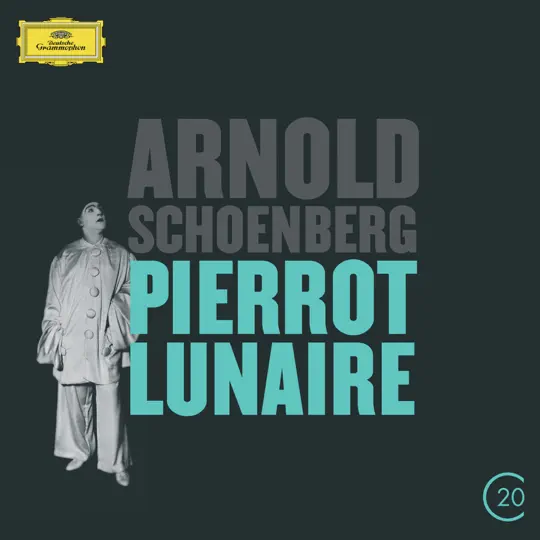
Pierrot Lunaire, Op. 21: I. Mondestrunken
Classic ∙ 1998
A Prophecy for a Hyper-Individualized Society
Today, we live encased within “feeds” meticulously curated by algorithms. Instead of grand narratives or universal tastes, we are surrounded by fragments of hyper-personalized information designed solely for “me.”
The reason Schoenberg’s music was rejected by the audiences of his time was likely because it was too “personally true.” Its uncompromising individualization and its fragmented melodies—where connections are severed—served as an uncomfortable mirror, reflecting a future where we would live as isolated islands within the small screens of our smartphones.
On Being Modern: The Piercing Solitude of Freedom
Individualization and fragmentation have granted us infinite freedom, but they have also left us with a profound, piercing loneliness. The reason Schoenberg’s music feels so cold and stark is perhaps because it unflinchingly reveals the truth that human beings are, at their core, solitary creatures.
With the visceral rhythms of Stravinsky, we could still hold onto the rope of “instinct.” But Schoenberg tells us to let go of even that final thread. He seems to whisper that we should listen only to our inner selves—that even that fragmented noise is, in fact, our most honest truth.
Epilogue: Returning to “Verklärte Nacht”
Fully grasping Schoenberg’s world remains a daunting task. However, the truth he foresaw—the prophecy that we would eventually exist as lonely, fragmented individuals—resonates with a painful clarity.
I return once more to Verklärte Nacht (Transfigured Night), conducted by Herbert von Karajan. Through the transparent sound of the Apple Digital Master, I witness the brilliant sunset of Romanticism, captured just moments before he ventured into the turbulent seas of atonality. Perhaps the reason that sunset feels so beautiful yet mournful is that we are already living through that “lonely and fragmented night” called modernity.
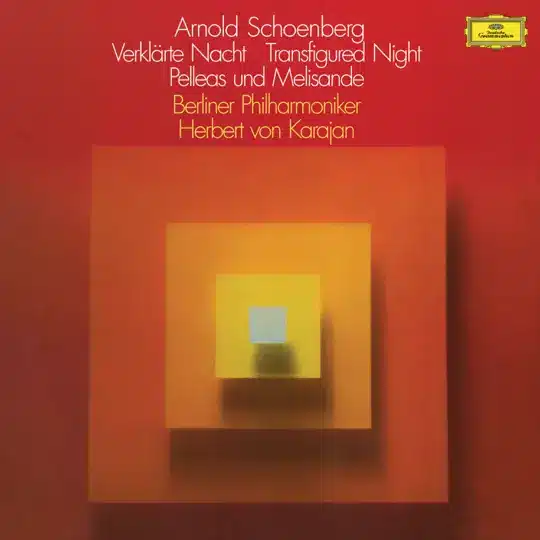
Verklärte Nacht, Op. 4: 1. Grave (Arr. For String Orchestra By Schoenberg – 1943 Revised Version)
C ∙ 1974
Key Terms: #Schoenberg #ModernMusic #Atonality #Fragmentation #HyperIndividualization #Solitude #PierrotLunaire #VerklarteNacht #SocialConsensus #MusicalPhilosophy


